

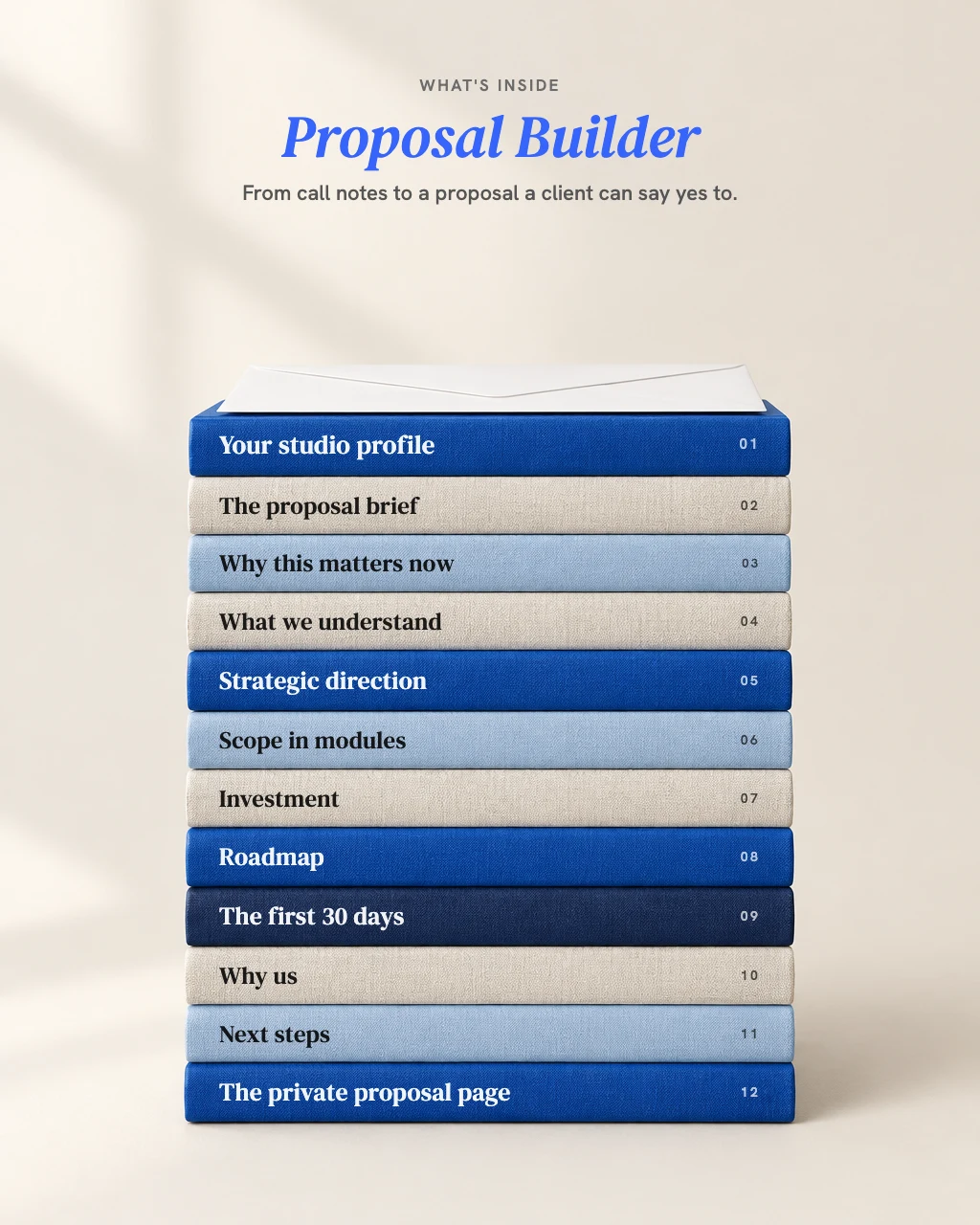
Proposal Builder
Ask AI for a proposal and you get a services brochure with the client's name pasted in. Proposal Builder installs a working proposal method in the AI you already use: it reads your call notes, asks what's missing, and writes the proposal with the client's outcome first, proof that you listened, one strategic idea before the tasks, the scope in clear modules, the money impossible to misread, a concrete first 30 days and one next step. Then it sends it the way the work suits: a designed PDF in your brand for design work, or a clear email for the rest, on a structure built for your kind of service.
Not a services brochure with a new name on it. A proposal built from what the client told you, with your fee exactly as you set it.
- Reads your call notes and asks only what they leave out
- Your fee exactly as you gave it, always apart from third-party costs; never a made-up result
- A designed PDF in your brand or a ready-to-send email, on a structure built for your service
One payment, no subscription.
Your AI turns your call notes into a proposal a client can say yes to: their outcome first, one clear idea, the money exactly as you gave it, and never a made-up result.
- Reads your call notes and asks only what they leave out
- Your fee exactly as you gave it, always apart from third-party costs; never a made-up result
- A designed PDF in your brand or a ready-to-send email, on a structure built for your service
- One payment, no subscription
- Download straight after paying, and a copy in your inbox
- Free updates within this version
Payment is handled by Stripe. We never see your card number.
Secure payment by Stripe. Card, Apple Pay or Google Pay. Download straight after.
Every skill on the site in one payment. Seven of them share one brand file, so you explain your business once.
- Brand Strategy
- Brand Naming
- Copywriting
- Content Hooks
- Page Planner
- Proposal Builder
- Project Brief
- UI Guidelines
- You save $213.00 on buying them separately
- One payment, no subscription
- All 8 downloads straight after paying, and a copy in your inbox
- Free updates within each version
Payment is handled by Stripe. We never see your card number.
Need all 8? Get the full set, $249.00 $462.00Black Friday, until 30 November
- Works in Claude, ChatGPT and other AI tools that read skills
- One payment, no subscription
AI can write a proposal. It reads like a brochure.
Ask AI for a proposal and you get a services brochure with the client's name pasted in: a list of deliverables, "investment on request", a testimonial from nobody, and a closing paragraph that could go to anyone. The writing was never the hard part. The hard part is showing the client you listened, putting the thinking before the tasks, and making the money impossible to misread.
Your call notes, not a template.
It reads what you paste and asks only what your notes don't answer.
Your money, exactly as you gave it.
It never sets, rounds or guesses a fee, and keeps your fee apart from what the client pays others.
Open your last proposal and cover the client's name. If it could go to any client you've ever had, that's the part to fix.
Which one is you?
Freelancers and consultants who write proposals after discovery calls.
Paste your notes; it asks for what's missing before it writes.
Studios and agencies with their own way of working.
Your services, real proof, process, terms, voice and look, saved once and reused for every proposal.
Anyone who wants the proposal to look the part.
A designed PDF proposal in your brand, with package options, a payment plan or a project plan attached if you want them.
Not for you if you want it to set your prices.
Every fee is yours. If you're unsure, it helps you work it out from your own numbers.
Same brief, two answers. A test run, 20 November 2026.
The brief: a freelance marketer, Okafor Studio, wants a proposal for Harbour & Vine, a family-run wine bar in Leeds. Weekends are full; the owner said "Tuesdays feel like we're open for the staff." The plan from the call: a midweek tasting series, an email list and a simple booking page, then three months running Instagram and email, for 12 weeks from 6 January. The fee: £4,800, made of £1,800 setup and £1,000 a month for 3 months, excluding VAT. Mailchimp, about £20 a month, paid by the client. Standard terms: 50% upfront, 50% at week 6. One testimonial, with permission to quote it.
The moment that matters.
The studio's terms say 50/50, but part of the fee is monthly. The plain AI split the full £4,800 into £2,400 and £2,400 without asking. Proposal Builder asked: "Does the 50/50 apply to the full £4,800, or do you bill the monthly part month by month?" The answer was the full £4,800, so both ended with the same figures. Only one had checked.
Questions asked.
The money.
Both kept every figure as given: £1,800 setup, £1,000 a month for 3 months, £4,800 in total, excluding VAT. Neither rounded or invented a fee, and the plain AI added a correct £3,000 line for the monthly part. Both showed Mailchimp apart from the fee and paid by the client; Proposal Builder also labelled it an estimate.
Quoting people.
Both used Tom's testimonial word for word, which the brief allowed. Both quoted the owner's line back to her; Proposal Builder asked first.
Proof and promises.
The plain AI added things nobody gave it: "recently" before the past project, "nothing goes out without you seeing it first", booking "in a couple of taps", and an email list as "the most reliable way to fill a room". Proposal Builder added no proof or promise, and listed its own interpretations for the studio to check. One of those still reads as fact on the page.
The first 30 days.
The next step.
Both: reply to approve, and the first invoice follows. Proposal Builder also said what comes after it: the discovery call, and the logo, photos and access the work needs.
After the draft.
A test run, not a customer.
The studio and the wine bar are fictional. The studio's answers were scripted, apart from a few small details the tester filled in and marked in the transcript. The plain AI was a general AI assistant with no skill, given the same brief in one message.
The questions it asked in this week's test run
"What else might Ellie choose instead of you: another agency, doing it in-house, or doing nothing?"
Wine bar proposal test run
"Any third-party costs (software, ad spend, printing), who pays, and are they estimates?"
Wine bar proposal test run
"Your terms say 50% upfront and 50% at week 6, but part of this fee is £1,000 a month. Does the 50/50 apply to the full £4,800, or do you bill the monthly part month by month?"
Wine bar proposal test run
"Does the booking page carry any hosting, domain or tool cost the client would pay?"
Wine bar proposal test run
You can, and it may read well. What you won't get is the work around the writing: asking what your notes leave out, checking how your terms fit this fee before working out instalments, asking before it quotes the client, keeping your fee apart from what the client pays others, and listing every gap before anything is sent. Proposal Builder runs inside ChatGPT or Claude. It's the same AI, given a method: ask first, agree the outline, then the draft, and never invent a fee, a result or a testimonial.
What you get: the proposal, and a way to send it
1. The proposal, ready to send.
A fixed structure for your kind of work (design, web, photography, video, direction, strategy, marketing, copywriting, events): why now, what we understood, the idea, the scope, the money, the plan, why us and one next step.
2. A designed PDF, or an email.
A PDF in your colours and logo for design work, or a short, clear email for the rest. You choose; each service has a sensible default.
3. Packages, a payment plan or a project plan.
Attach any of them, or none: two or three packages at your prices, your payment terms laid out, or a week-by-week plan on its own page.
4. A list of every gap.
Each missing fact marked, with who fills it. Nothing goes to the client until the list is empty.
Plus, in the download.
A quickstart and install guides, a studio profile worksheet, and a sample run from call notes to a private page, with the designed proposal from it. Free updates for every version 1 release.
Three ways in
Tell your AI what you need. It reads what you paste and picks the route.
Write a new proposal.
From a call, your notes or an email thread. A brief to approve, then the full draft, then the output you choose.
Fix a proposal.
Paste one you've already written. It lists what to keep and what to fix, then brings you a draft to approve.
Send a quote.
For a one-line job. It may suggest a proposal would serve better; if you still want a quote, it writes one with the same money rules.
Already have a brand file?
If you've run Copywriting, Brand Strategy or Brand Naming, it starts from your brand file.
How it works
It stops at each step until you approve or correct it.
Set up your studio once.
Services, real proof with permission, how you price, your process, terms, voice, logo and colours.
Paste your call notes.
It asks only what they don't answer: the goal, scope, timeline, your fee, third-party costs, the next step.
- Your checkpoint
Approve the brief.
Who it's for, the idea, the modules, the money as you gave it, and every gap. No proposal text yet.
- Your checkpoint
Approve the draft.
Then it becomes a designed PDF or an email, or a brief for your designer.
What it will not do
Set your prices.
Every fee, rate and payment schedule is yours. It helps you work one out from your own numbers, never gives you a figure.
Invent proof.
No made-up case studies, results, client names, logos or testimonials. Missing proof is marked for you to fill.
Promise outcomes.
No guarantees, deadlines or terms you haven't given. Any date you haven't set is marked for you to confirm.
Hide the money.
Your fee is always shown apart from what the client pays others: ad spend, software, printing.
Send anything with a gap.
Every missing fact is listed; nothing goes to the client until the list is empty.
Write your contract.
It summarises your own terms; it does not write legal terms.
Answers to your questions
Will my proposals read like everyone else's who buys it?
No. The structure is shared; the content is yours: your client's words, your services, your proof, your voice.
Will it tell me what to charge?
No. If you're unsure, it helps you work it out from your own numbers: the time each part takes, your rate, similar past projects. The decision stays yours.
Is the proposal a contract?
Not on its own, but a proposal can become binding once your client accepts it. It sets out the work and the fee and points to your own agreement; it does not write contract terms. Have a lawyer check your terms.
PDF or email: which do I send?
Design work (brand, websites, photography, video and direction) defaults to a designed PDF; strategy, marketing, copywriting and events default to an email. You can switch either way. Making the PDF needs an AI tool that can run code; if yours can't, you get a print-ready page to save as a PDF.
Which AI tools does it work in?
Claude, Claude Code, ChatGPT and other AI tools that read skills. The install guide covers each one.
The expert behind this method

Sahil Gandhi, Brand Professor.
300+ brands and 100+ AI systems built. The proposal framework in this skill is his: lead with the client's outcome, show the thinking before the tasks, make the money impossible to misread, and end with one next step.
Verify: brand-professor.com
What this job costs to have done.
Published market rates, stated as ranges. A person brings their own judgment; Proposal Builder brings a working method to the AI you already use, for one payment.
Ranges as published by each source, checked 20 and 21 November 2026. Prices vary by market, scope and experience.
Your client already told you what they want. The proposal shows them you listened.
Secure payment by Stripe. Card, Apple Pay or Google Pay. Download straight after.
Every skill on the site in one payment. Seven of them share one brand file, so you explain your business once.
- Brand Strategy
- Brand Naming
- Copywriting
- Content Hooks
- Page Planner
- Proposal Builder
- Project Brief
- UI Guidelines
- You save $213.00 on buying them separately
- One payment, no subscription
- All 8 downloads straight after paying, and a copy in your inbox
- Free updates within each version
Payment is handled by Stripe. We never see your card number.
Need all 8? Get the full set, $249.00 $462.00Black Friday, until 30 November
Related skills
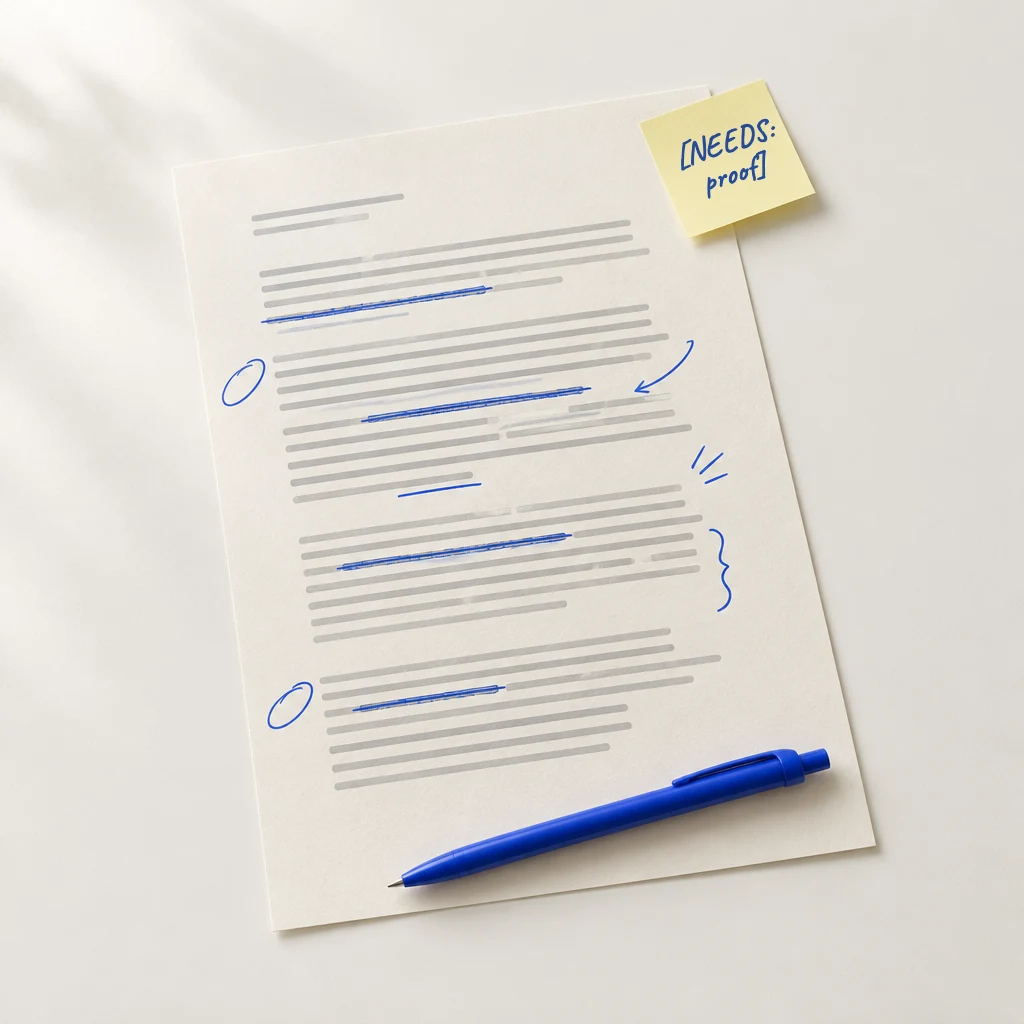
Your AI asks before it writes, picks one angle, writes in your voice and never makes up a quote, a number or an offer.
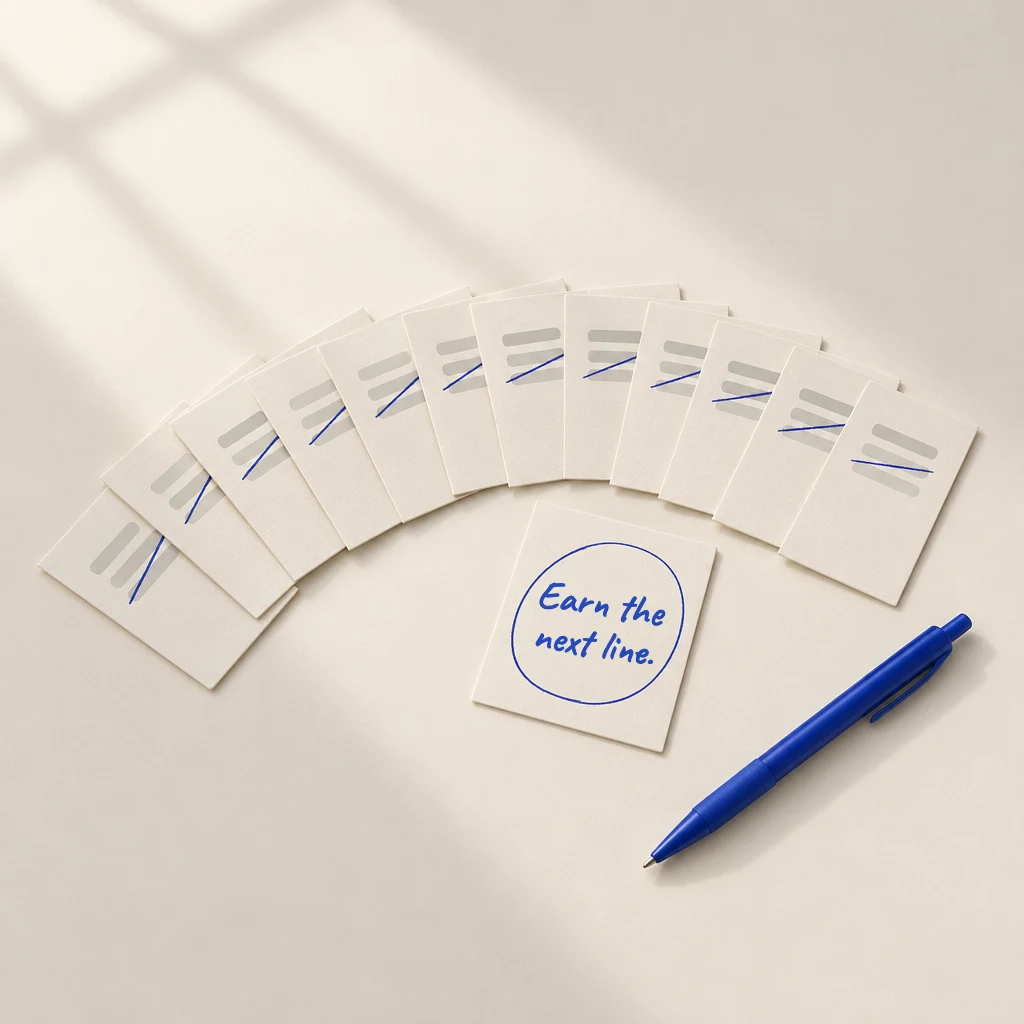
Your AI writes 50 or more openings from your own stories and numbers before it judges one, names what each one promises, and never makes up a result.
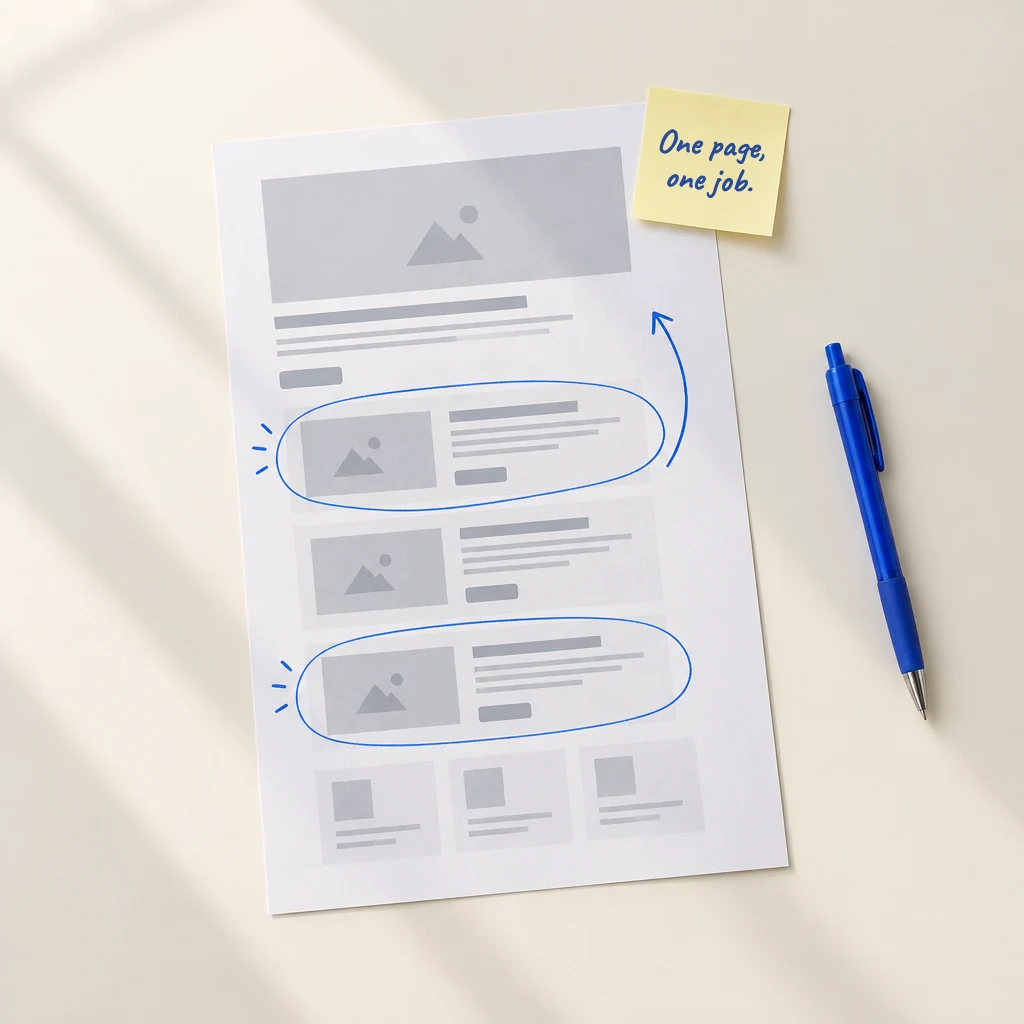
Your AI agrees who the page is for and what it promises, gives every section one job, and hands you a grey, annotated wireframe with every missing fact marked, never made up.