Naming something, or renaming it

Brand Naming, by Brand Professor

Ask AI for a brand name and you get a list. Brand Naming installs the method behind 300+ brands in the AI you already use, so it works the way a naming strategist works: brief first, then a wide pool, then tests, then one name you can defend.

Not a list of names. A brief, a wide pool sorted by kind, and one name tested before it's recommended.

  • Brief first: no names until you approve it
  • Six criteria, weighted, in a table you can check
  • A quick collision search on every shortlisted name, and a plain list of what it couldn't check
$29.00$60.00Launch price, first 100 buyers
Launch price for the first 100 buyers. One payment, no subscription.
Buy now

Secure payment by Stripe. Card, Apple Pay or Google Pay. Download straight after.

See the deliverable first Browse more skills
  • Works in Claude, ChatGPT and other AI tools that read skills
  • One payment, no subscription
  • Read a full sample run before you buy
Expert:
Sahil Gandhi, Brand Professor
Files:
17 (the skill, quickstart, install guide, research notes, naming workbook, 3 templates, a sample project, license, terms, changelog, support)
Works with:
Claude, Claude Code, ChatGPT and other AI tools that read skills
Instant download Free updates
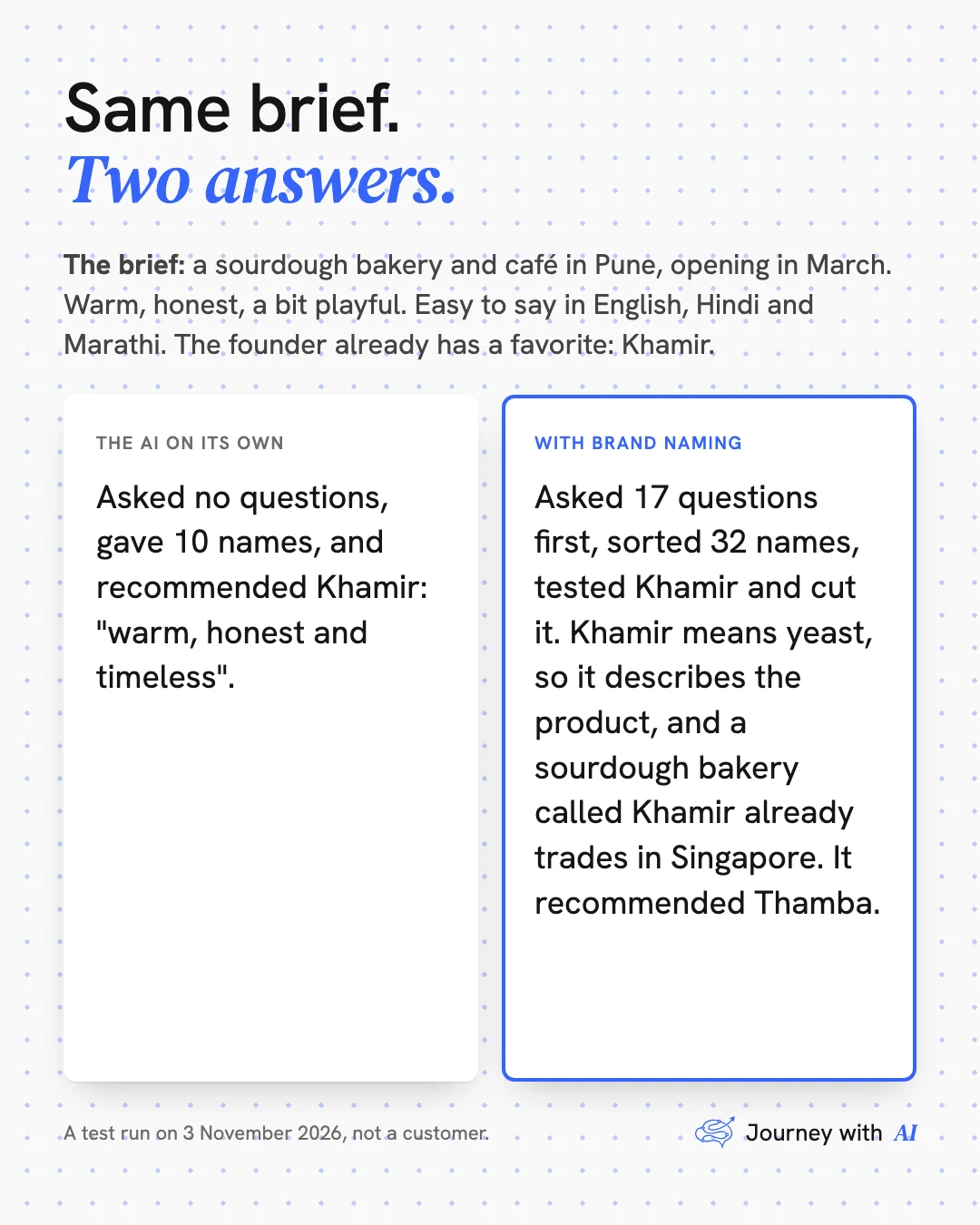
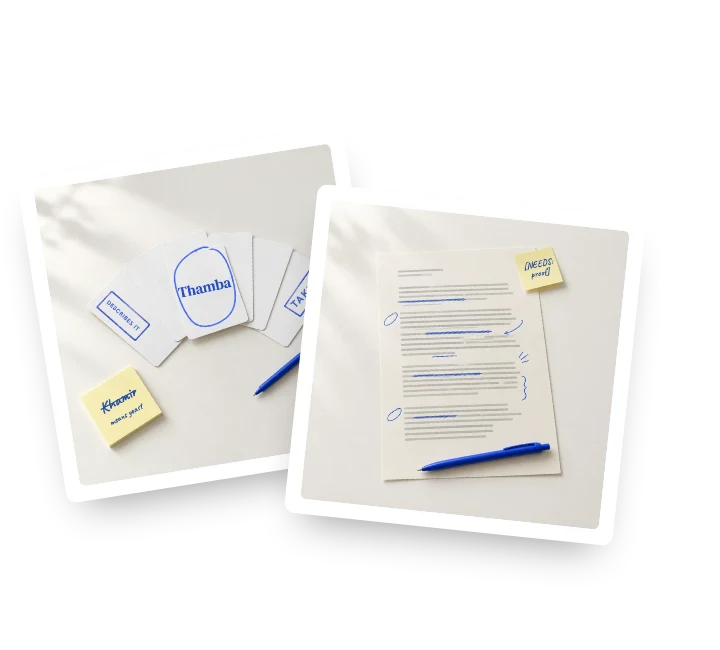
Same brief, two answers: the AI on its own recommended Khamir; Brand Naming tested it, cut it and recommended Thamba

AI has read every name. It has chosen none.

A plain AI answer looks helpful. Ten names, a favorite, a line about checking trademarks. Then you search the favorite and find a bakery in Singapore already using it. The list was never the hard part. The hard part is the decisions: what the name has to carry, which kinds of names you haven't tried, and which ones fall over the moment someone checks.

It asks before it names.

A short brief: what you sell, who walks in, what the name must survive (a sign, a crate, a handle), and the names you already carry. Nothing gets named until you approve it.

It goes wide, then sorts.

20 to 30 candidates, sorted by the kind of name each one is. Where a direction is thin, it fills it, so you see the options you wouldn't have reached.
Try this now

Say your name out loud to someone who's never heard it, then ask them to spell it. If they can't, neither can the next customer.

The questions it asked on a real bakery brief

"Describe one real person you expect through the door on a Saturday."

Bakery test run

"Why does the name matter this month? What is waiting on it?"

Bakery test run

"Three to five values: things you would turn down a sale to keep."

Bakery test run

"Should the name say 'bakery' outright, hint at bread, or stay abstract and let the shopfront do the explaining?"

Bakery test run

"Any names you are already carrying, including ones you think are weak. I will not comment on them yet."

Bakery test run

Same brief, two answers. A test run, 3 November 2026.

The brief: a sourdough bakery and café in Koregaon Park, Pune, opening in March. Young professionals and families who travel for good bread. Patient, warm, honest, a bit playful. Easy to say in English, Hindi and Marathi. Local, not a European import. No "artisan" or "crust". The Instagram handle matters most. Short. The founder already has Khamir and Rise & Rest.

The founder's own name, Khamir.

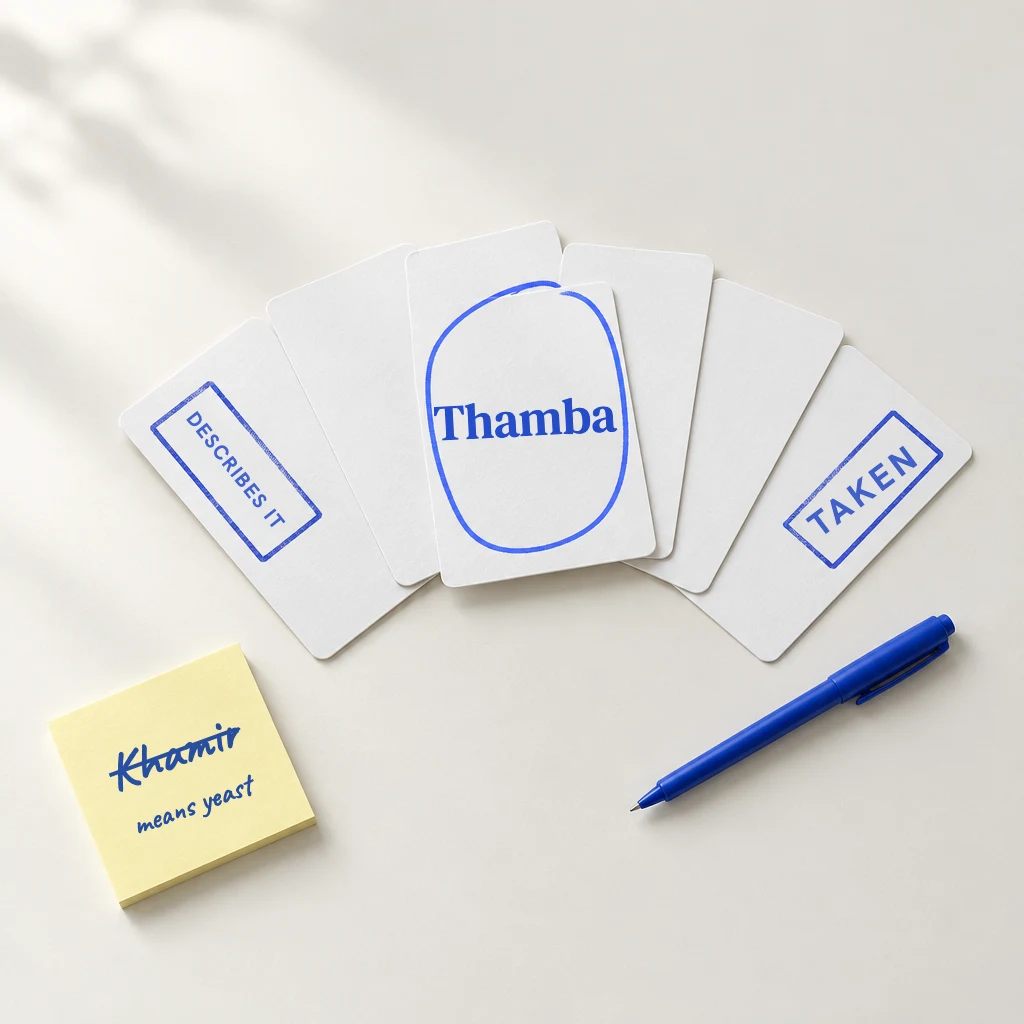
Plain AI recommended it. Brand Naming tested it and cut it: Khamir means yeast, so for a bakery it describes the product, the weakest kind of trademark, and a sourdough bakery called Khamir already trades in Singapore.

Questions before any name.

Plain AInone.
Brand Naming17, in three short blocks.

Candidates.

Plain AI10.
Brand Naming32, sorted by kind of name, 7 tested.

Recommendation.

Plain AIKhamir or Dheere Dheere.
Brand NamingThamba, with Halu Halu as runner-up, scored 86 against 80 on six criteria, weights shown.

Checks.

Plain AI"Check trademark availability."
Brand Namingdomains looked up (thamba.com and thamba.in taken; thambabakery.com and .in free), a web search for collisions, and meanings in Marathi and Hindi with sources.

Risks named.

Plain AInone.
Brand Namingfour, in order: trademark unchecked, domains taken, the "th" sound outside Maharashtra, and that "stop" alone on a shopfront can read as keep out.

What it couldn't check.

Plain AInot stated.
Brand Namingthe trademark register and Instagram, with the exact searches to run.

One error a Marathi speaker would catch.

The plain answer offered "Aamba" as "from आंबट (sour)". In Marathi, आंबा means mango.

A test run, not a customer.

Both answers came from the same AI. The skill run used a scripted founder. One name you can defend beats fifty you can't.

Both answers in full.

Every word of the plain answer and of the skill's run, unedited. Open "See the deliverable first" by the price.

What they wrote back

“I’d been sure about ‘The Wellness Clinic’ for months. The skill tested it, showed me it was descriptive and already crowded in the UK market, and cut it. I was annoyed for a day and grateful ever since.”
Co-founder, Health & Wellness Start-up
“I gave plain ChatGPT and the skill the same brief. One gave me ten safe names. The other asked me 12 questions first and gave me one name with the risks listed. Not close.”
Creative Director, Independent Brand Studio
“It flagged that ‘Pipi’ means ‘wee’ in French before we’d spent anything on it. That alone paid for the skill many times over.”
Founder, Children’s Nutrition Brand
“An agency quoted me £12,000 and six weeks for naming. I had a shortlist I trusted in an afternoon.”
Founder, Interior Design Studio
“We needed a name that worked in English, Hindi and Marathi. It checked how each shortlisted name sounded and what it meant in all three. No generic tool did that.”
Co-founder, Maharashtrian Food Brand

From people who have used Sahil Gandhi's skills, frameworks and processes in their own work. Names withheld at their request. Results vary from business to business.

How each name is tested

A quick collision search first.

Every shortlisted name gets a knockout search before you approve the shortlist, so you only approve names that can survive.

Six criteria, weighted.

Pronunciation 15, memorability 20, strategic fit 20, ownability 20, audience response 15, visual room 10. If your brief's top constraint is ownability, its weight can rise. The weights used are always shown.

Ownability, in two parts.

Trademark, and domains and handles. When your AI can't search a trademark register, the name is marked "Trademark not yet searched", and you get the exact search to run, with the register and classes for your market (India, Singapore, the UK, Australia, Canada, the US and the EU).

Your limits, on the real surfaces.

Each name is checked against your brief's hard limits (length, words to avoid, the handle) before scoring, and read on the sign, menu or handle you named.

A recall test with real people.

A 24-hour and 48-hour survey for testing your two finalists on real buyers.

What you get

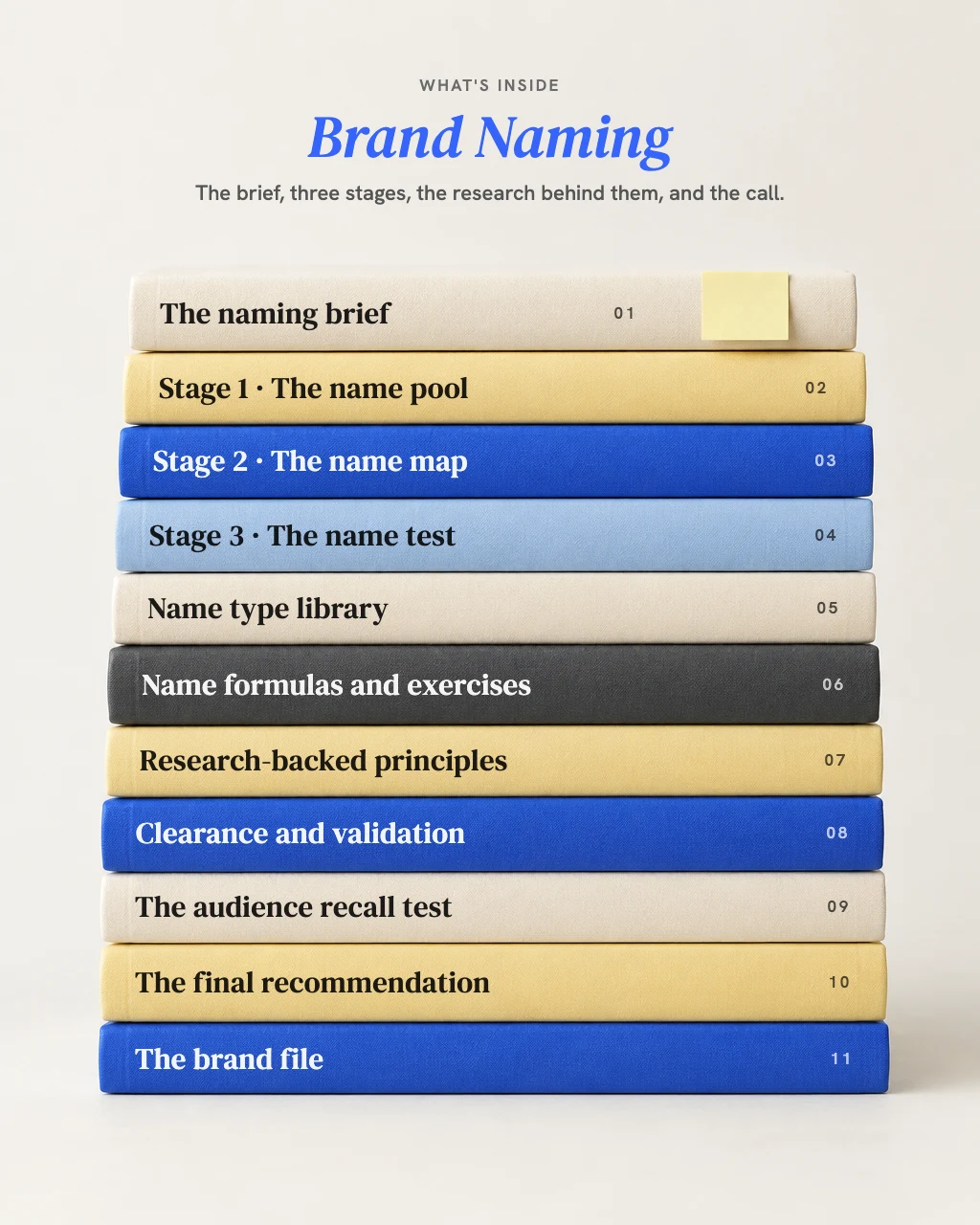
1. The naming brief.

Approved by you before any names exist.

2. The pool and the map.

20 to 30 candidates sorted by kind, the thin directions filled, and a proposed shortlist of 5 to 8.

3. The recommendation.

One name and why it works, the six-criteria table, the first-pass checks, the runner-up and when it would win, the names to cut and why, and your next 30 days. As a document to share, or a deck to present.

Plus, in the download.

A quickstart and install guides, a worked example, a founder workbook, a scorecard, a recommendation template and a survey for testing finalists with real people. Free updates for every version 1 release.

Who it is for, and who it is not for

A founder naming a company or product that money will go behind.

The brief is written before any names, so the choice can be defended later.

Two founders who disagree about a name.

Every score is in a table, so the disagreement becomes a conversation about what the company sells, not a matter of taste.

A coach or consultant deciding between their own name and a brand name.

There's a route for your own name, a brand name, or both.

An agency running naming for a client.

The rationale document is built to get a name approved by people who were not in the room.

Not for you if you want a list of 50 names in a minute.

Plain AI does that already.

How it works

Quick questions get quick answers. A real name going on a real thing gets the full process.

1. Install it.

In Claude, Claude Code, ChatGPT or another tool that reads skills. Turn on web search, so it can run the first-pass checks.

2. Approve the brief.

It asks its questions and shows the brief. Nothing is generated until you approve or correct it.

3. Approve the shortlist.

Swap names in or out, including your own.

4. Take the recommendation.

One name, the runner-up, the names to cut, and what to do next.

Quick questions get quick answers.

Ask for naming exercises, formulas or quick feedback on a name, and it answers directly, without the full process.

What it will not do

Tell you a name is cleared.

It runs first-pass checks only, and only where your AI can search. Before you use a name commercially, a trademark attorney has to clear it in every market you trade in.

Pretend it checked something it couldn't.

Anything it couldn't check is labeled "not checked in this environment", with the exact check for you to run.

Generate names before the brief.

Your favorite names go into the pool, but nothing is judged until the brief says what the name has to do.

The expert behind this method

Sahil Gandhi, Brand Professor.

300+ brands and 100+ AI systems built. This skill is how he names things: the brief before the names, every direction mapped before anyone picks a favorite, and every shortlisted name tested before it is recommended. None of it was published before.

Answers to your questions

Something we have not covered? Contact us directly.
Can't I just prompt this myself?

You can prompt for names. You can't prompt for the questions you didn't know to ask. See the side-by-side above.

Does it check trademark availability?

It runs first-pass web, domain and language checks where your AI can search. Most AI tools can't query trademark registers, so it gives you the exact search to run, with the register for your market. It never says a name is cleared.

Is this a course?

No. Nothing to watch. Your AI does the work with you.

What does "a name you can't own is out" mean?

A weak rating on ownability cuts the name, whatever its total. The score can't buy its way past it.

Do I need to run any code?

No. It scores the shortlist itself, in a table you can check.

I already have three names. Can it just judge those?

For quick feedback, yes, and it says the feedback is provisional. For a real decision it writes the brief first and adds your names to the pool, because judging names against criteria you chose after seeing them is not a test.

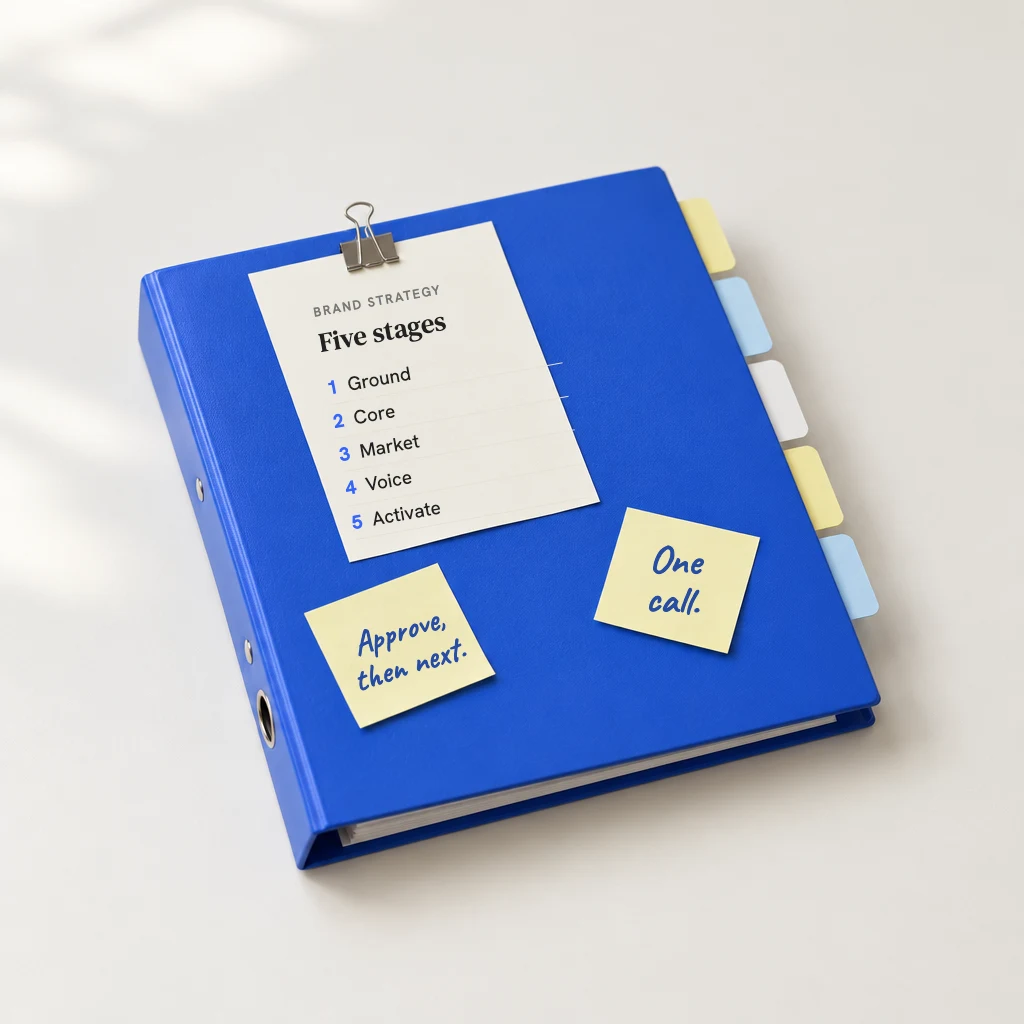
Does it work with Brand Strategy?

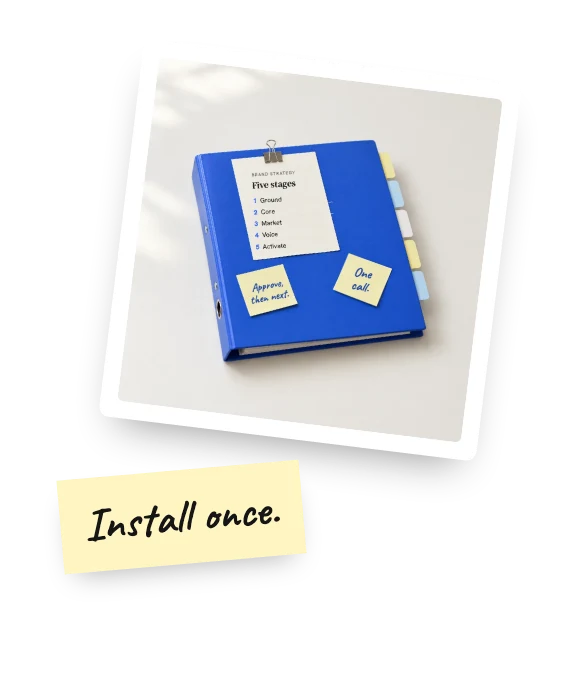
Yes. They share one brand file. If you have run Brand Strategy, the naming brief fills in from it, and the result is saved back.

Which AI tools does it work in?

Claude, Claude Code, ChatGPT and other AI tools that read skills. The install guide covers each one.

Can I see it work before I buy?

Yes. The sample run that ships in the download is free to read: the brief, 24 candidates sorted by kind, the shortlist, the recommendation, the runner-up and the cut. It is linked from the top of this page.

You'll say the name every day for years. Test it before it goes on the sign.

$29.00$60.00 Buy now

Secure payment by Stripe. Card, Apple Pay or Google Pay. Download straight after.