No clear position yet? Start here.

Brand Strategy, by Brand Professor

Ask AI for a brand strategy and it fills in a template. Brand Strategy installs the method behind 300+ brands in the AI you already use, so it works the way a senior strategist works: it finds the real problem, checks what your rivals already say, and makes one call you can act on.

Not a template to fill in. A strategist's questions, asked in order, ending in one call you can act on.

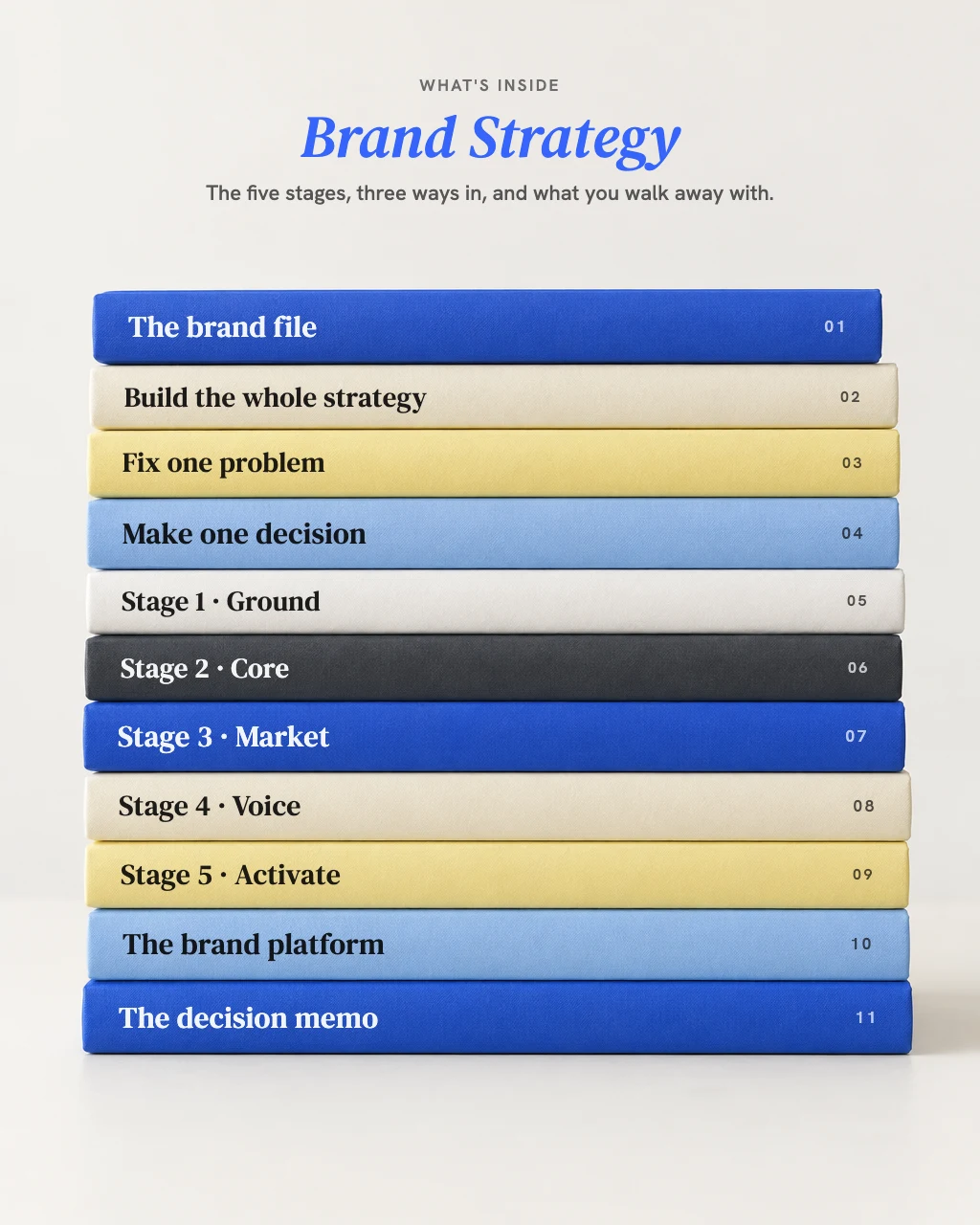
  • Three ways in: build the whole strategy, fix one problem, or make one decision
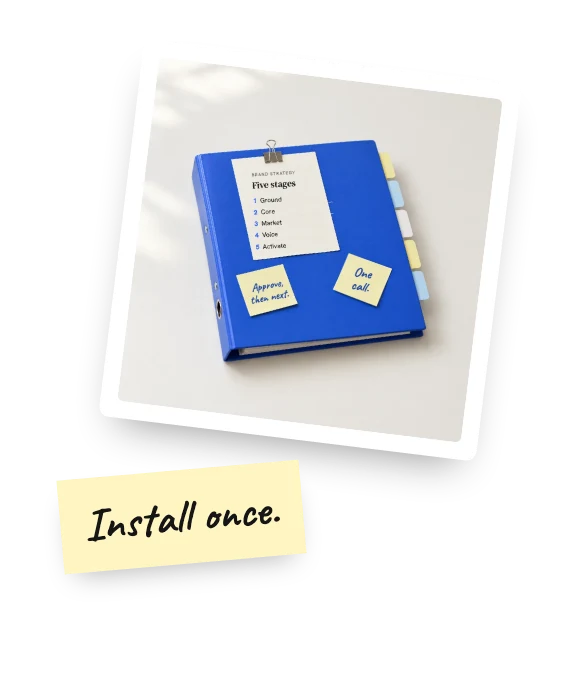
  • Brand Professor's five-stage workshop, with checks at every stage
  • One brand file that Brand Naming reads too, so nothing is asked twice
$79.00$150.00Launch price, first 100 buyers
Launch price for the first 100 buyers. One payment, no subscription.
Buy now

Secure payment by Stripe. Card, Apple Pay or Google Pay. Download straight after.

See the deliverable first Browse more skills
  • Works in Claude, ChatGPT and other AI tools that read skills
  • One payment, no subscription
  • Read a full sample run before you buy
Expert:
Sahil Gandhi, Brand Professor
Files:
16 (the skill, quickstart, install guide, founder workbook, 2 templates, 2 sample outputs, license, terms, changelog, support)
Works with:
Claude, Claude Code, ChatGPT and other AI tools that read skills
Instant download Free updates

AI knows every brand framework. It has never had to choose.

A plain AI answer sounds right. Lead with what makes you different, rewrite the homepage, add case studies. Then you look at your cheapest rival's homepage and find it already says all of it. Advice is easy to generate. The hard part is the judgment: which problem is real, what the market already claims, and what you will give up to own something.

It asks before it answers.

What you asked for is treated as the stated need. The first questions find out what is really going on.

One brand file, every session.

Everything you decide is saved to one brand file. The next session starts where the last one stopped, and Brand Naming reads it too.
Try this now

Read your homepage's first line, then put your cheapest rival's name on it. If it still works, the problem isn't the copy.

Three ways in, one method

Start with whatever is in front of you. Your AI asks a few questions and picks the route.

Build the whole strategy.

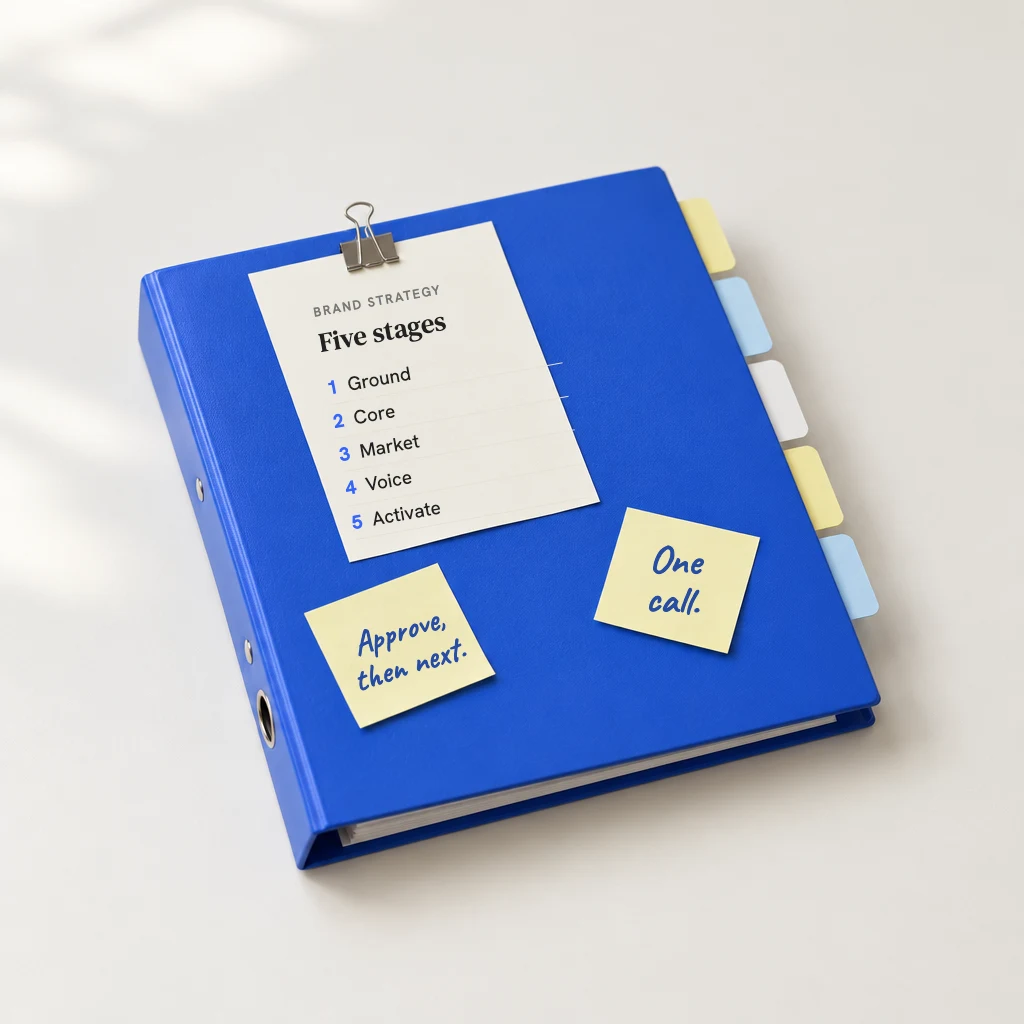
Brand Professor's four-day workshop, as five stages: what the brand is, what it stands for, where it competes, how it sounds, and how it shows up. You approve each stage before the next begins. At the end you get the full brand platform, led by a one-page summary.

Fix one problem.

You sound like every rival, you keep losing to a competitor, your message isn't landing. It diagnoses the real problem, tests the answer against the market, and gives you one call with a plan for the first 30 and 90 days.

Make one decision.

A launch, a new market, a partnership, a cheaper line. It reframes the question, tests the options (always including "do nothing" or "wait") and writes a one-page memo.

The questions it asked in this week's test runs

"Do you have a brand strategy today, written down or clear in your head?"

Fix test run, its first question

"Who do you lose clients to? Name names where you can."

Fix test run

"What do you do for a client that those alternatives don't? Things a client could see, not how you feel about the work."

Fix test run

"Who makes the final call: you alone, or with partners or investors?"

Decide test run

"What prompted this now, and what do you fear and hope from it?"

Decide test run

Same brief, two answers. A test run, 3 November 2026.

The brief: Ledger & Lane, a 12-person accounting firm in Manchester for creative freelancers and small studios. The website says "Trusted, personal accounting for creatives". Clients leave for apps and cheap online accountants, saying "it's cheaper and does the same". What the firm thinks makes it different: a named accountant who understands irregular income, VAT on international clients and IR35, and a reply within a day.

The moment that matters.

The plain AI's main advice was to lead with the named accountant, IR35, irregular income and the one-day reply. Brand Strategy read the market first and found a cheap online accountant for creatives already promising every one of those, from £22 a month. Following the plain advice would have made the firm sound like a dearer version of its cheaper rival.

Questions asked.

Plain AInone.
Brand Strategy4, before any advice, then one check: "Is that the problem we should be solving?"

Rivals read.

Plain AInone.
Brand Strategy4 rivals' pages, read and cited.

The call.

Plain AI8 workstreams (messaging, values, case studies, visuals, pricing tiers, retention).
Brand Strategyone. Sell the check before the decision: a written answer on a contract or overseas invoice within one working day, before the client signs or sends it.

What it costs.

Plain AInot stated.
Brand Strategystop matching app prices; the year-end return stops being what you sell.

What is unproven.

Plain AInot stated.
Brand Strategydemand, because no client has been asked yet. The first 30 days count real pre-decision emails and run five client conversations before anything is rebuilt.

Invented detail.

Plain AIan example case study, "saved a Manchester photographer £4,000".
Brand Strategynone. Every rival fact cited, every gap marked.

A test run, not a customer.

The firm is fictional and the founder's answers were scripted. The full strategy is linked from "See the deliverable first" by the price. A strategy is a choice. Get one you can act on.

What they wrote back

“I asked it to sharpen my positioning. Instead it told me our main claim was one our closest competitor could make just as easily. It was right, and nobody else had said it.”
Founder, Sustainable Homeware Brand
“The question that got me was, ‘What would your best customer lose if your business disappeared tomorrow?’ I’d never had to answer that honestly, and it changed the whole brief.”
CEO, B2B Software Company
“I took the strategy into a meeting with our board, and for the first time nobody argued about who we’re for.”
Managing Director, Manufacturing Company
“We used the strategy work in our pitch to a regional retail chain and won it. They said our positioning was the clearest they’d seen.”
Business Development Director, Commercial Fit-out Firm
“I’ve used Brand Strategy on seven projects now. It asks different questions each time because each business is different.”
Agency Founder

From people who have used Sahil Gandhi's skills, frameworks and processes in their own work. Names withheld at their request. Results vary from business to business.

What changes when it's installed

It asks before it answers.

It won't write a positioning line until it knows the real problem.

It reads the market.

Where your AI can search, it reads your rivals' pages and cites them.

It makes a call.

One recommendation, what it costs you, and what to do first. Not a menu.

It tells you what it hasn't proven.

Anything it couldn't check is marked, with the quickest way to check it.

It never invents proof.

No made-up customer quotes, numbers or case studies.

Inside the five-stage workshop

1. Ground: where the brand is and where it must go.

The Brand Mirror, The Brand Horizon, The Action Gap.

2. Core: what it stands for.

The Values Forge, The Brand Villain and The Brand Hero, The Purpose Engine, The Brand Oath.

3. Market: where it wins.

The Audience Blueprint, The Three Gaps, The White Space, The Value Line, The Proof Point.

4. Voice: how it sounds.

The Unguarded Room, The Personality Dial, The Familiar Twist, The Voice Map, The Brand in a Breath.

5. Activate: what it does next.

The Touchpoint Map, The Experience Arc, The Brand Roadmap.

What you get depends on the way in

Build: the brand platform.

A one-page summary first: your brand in 30 seconds, purpose, vision and mission, your position and proof point, four personality words, and the first two actions with an owner and a start date. Then the full core, market, voice and 24-month roadmap, and what you stop doing.

Fix: three documents.

The problem brief, the working behind the call, and the plan: your position, what it stands against, and phased next steps.

Decide: a one-page memo.

The recommendation in one sentence, why, what it costs, the options tested against your strategy, the first sign it's working, and what would make you reverse it.

Plus, in the download.

A quickstart and install guides, a brand platform template, a decision memo template, a founder workbook to fill in before your first session, and two sample outputs from the test runs. Free updates for every version 1 release.

Who it is for, and who it is not for

A founder fixing a brand without an agency budget.

You get the diagnosis and the plan an agency would start with, worked out from your own answers.

A marketer who has to defend a position.

You get the working behind the call, so you can answer "why this?" in front of a boss or a client.

A consultant who runs brand work for clients.

The same workshop on every engagement, with one brand file per client.

Not for you if you want a logo, a color palette or a 40-slide deck by lunch.

The method asks real questions and expects honest answers.

What it will not do

Promise business results.

It gives you a decided position and a plan. What the market does next is out of its hands, and yours.

Invent evidence.

No customer quotes, numbers or research you didn't give it. Where a fact is missing, it marks the gap for you to fill.

Pretend to talk to real people.

Some steps need customers or people who don't know the brand. It writes the questions and waits for you to bring back what they said.

Skip the approval points.

It stops and waits for you at each one.

The expert behind this method

Sahil Gandhi, Brand Professor.

300+ brands and 100+ AI systems built. This skill is his workshop: the five stages and the exercises he runs with founders, the questions he asks first, and the answers he refuses to accept. None of it was published before.

Answers to your questions

Can't I just ask AI for a brand strategy?

You can, and you'll get a sensible template. See the side-by-side above for what it misses.

Do I need to finish the whole strategy?

No. Fix one problem or make one decision. Build is there when you want it.

Will my strategy sound like everyone else who bought it?

The method is shared. The work comes from your business, your answers and your rivals, so no two outputs match.

Is this a course?

No. Nothing to watch. Your AI does the work with you.

Does it just generate a positioning statement?

No. It asks three questions first, then builds the whole strategy, fixes one problem or helps you make one decision, depending on what you need.

What if my brief is already clear?

It still asks its questions. A clear-sounding brief is the most common way brand work goes wrong, so it treats yours as the stated need and looks for the real one underneath.

Which AI tools does it work in?

Claude, Claude Code, ChatGPT and other AI tools that read skills.

Can I stop halfway?

Yes. Before you stop, it saves everything to your brand file and tells you exactly where the next session starts.

Do I need the other skills first?

No. This one comes first: strategy, then the name, then the copy. Brand Naming and Copywriting work best on a brand that has been through this.

Who built the method?

Sahil Gandhi (Brand Professor), from 300+ brands. The frameworks are his, and their internal names stay out of what it hands you.

Until the position is decided, every page, ad and pitch is a guess.

$79.00$150.00 Buy now

Secure payment by Stripe. Card, Apple Pay or Google Pay. Download straight after.