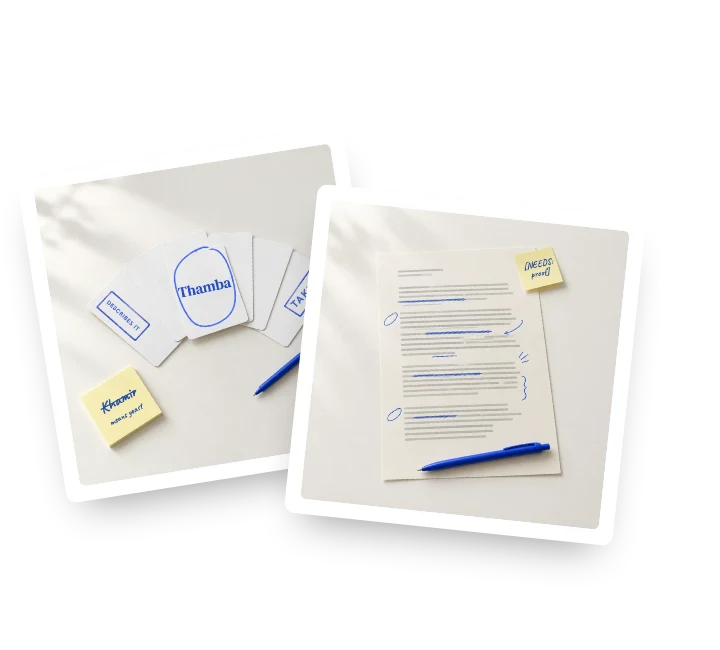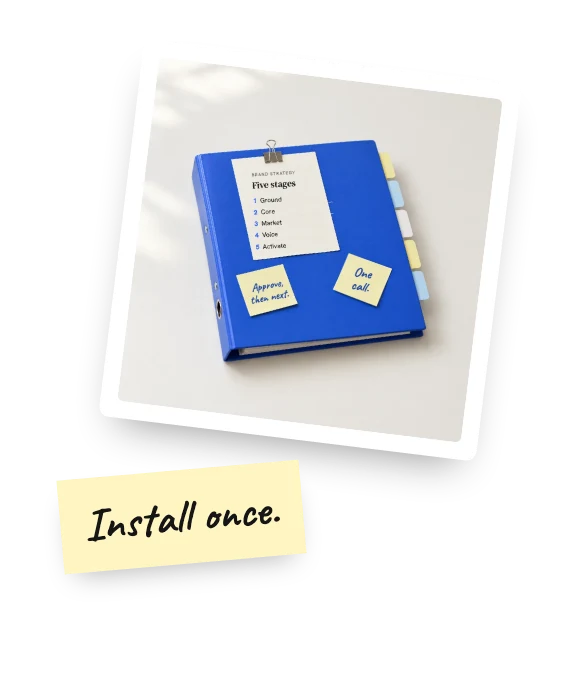

Test run. The same AI, the same bakery brief, twice: once on its own, once with Brand Naming. The plain answer recommended the founder's own name. The skill tested it, cut it, and showed why. Both answers in full.
Sample output. A fictional Portland coffee roaster asked to put its name on a $12 supermarket blend. The skill wrote a one-page memo: counter with the farms named on the bag, and if the chain refuses, decline.
Sample output. A fictional 12-person accounting firm losing clients to apps. The skill read four rivals, found one already saying everything the firm planned to say, and made one call: sell the check before the decision.
Sample output. A voice profile for a fictional bakery, built from three short pieces it had written, with every trait backed by its own words and tested against a rival's name.
Sample output. A fictional eight-person agency whose homepage never said it only works with pet brands. The skill kept the founder's own numbers, marked what was missing, and rewrote the top of the page.
Sample output. A fictional grocery app's payment error messages and a delivery-delay subject line, as five options each with a recommendation, and every unconfirmed promise marked.
Sample run. A pre-launch skincare brand for women 50 to 65, named from brief to recommendation: 24 candidates sorted by kind, a shortlist of six, one name recommended, a runner-up and a cut.
From your first install to a stack you actually maintain, without the theory.