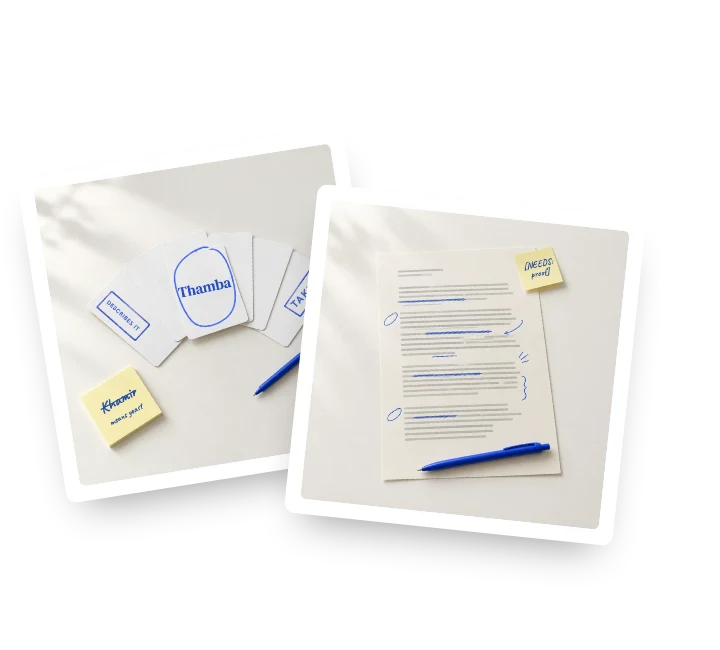
This is one of the two sample outputs that ship in the Brand Strategy download, published here in full and unedited so you can see what the skill produces before you buy.
Sample output, not a customer story. This was produced in a pre-release test run on 3 November 2026. The business is fictional and the founder's answers were scripted. Rival facts were read from public pages during the run and are cited as found that day. It is shown unedited so you can see what the skill produces before you buy.
What the founder said: "Our accounting firm sounds exactly like every other accountant. We keep losing clients to apps."
The firm (fictional): Ledger & Lane, a 12-person accounting firm in Manchester for creative freelancers and small studios. Website line: "Trusted, personal accounting for creatives." Values: integrity, clarity, partnership. Clients who leave say "it's cheaper and does the same."
The final strategy the skill delivered:
Stop selling the year-end return, which an app files for £19 a month, and sell the check before the decision: any client can send a contract, a quote or an overseas invoice to their named accountant and get a written answer within one working day, before they sign or send it.
Your clients told you the problem in five words: "it's cheaper and does the same." On the only thing they can see, they are right. FreeAgent, Crunch and GoForma all produce the same year-end accounts and the same tax return. If that is the comparison, the client pays the least they can, and FreeAgent is free for anyone banking with NatWest, RBS or Ulster Bank.
Your words do not help. "Trusted, personal accounting for creatives" is three claims, and the rivals already make two of them, more loudly. GoForma promises "a named, UK-qualified accountant", a reply "within one business day", IR35 reviews and help with "lumpy retainers", for creatives, from £22 a month. If you lead with what you know, you sound like a dearer GoForma.
What nobody promises is the moment before. A creative's costly mistakes are made when they sign a contract that brings IR35 into play, or invoice a client abroad with the wrong VAT treatment. An app cannot be asked about that moment. A volume firm can be asked, but its price is built on spending little accountant time per client. A 12-person firm with named accountants is built for exactly that time. You already do this work when clients ask; you have simply never promised it, priced it or shown it.
The timing is right because the cheap end has moved into your niche. Two of the four firms I read sell specifically to creatives. Waiting means competing with them on their terms: price.
This rests on your description of the work and on the market's public words. It has not yet been tested with a single client. That is the first job below.
The internal line for the team: make creative freelancers and studios see Ledger & Lane as the accountant they check with before they sign or send, not the firm that files it after. Said to a client, the same idea: we read the contract, not just the receipts.
Day to day, three things change. First, the check becomes a written rule with a clock on it: a contract, a quote or an overseas invoice sent to the named accountant gets a written answer within one working day, and every one is logged with the time in and the time answered. Second, the firm talks about the moments before, not the services after: the homepage, the welcome email and the first call all lead with "send it to us before you sign or send it". Third, the fee is set to pay for that time, and the firm stops matching app prices to hold on to clients who only want the return.
The year-end work stays, and stays good. It just stops being what you sell.
Phase 1, first moves (next 30 days)
Outcome at 30 days: the promise exists in writing, the first month of reply times is on record, and you know whether real clients use and want the check.
Phase 2, build (days 31 to 90)
Outcome at 90 days: everything a new client sees says the same thing, and the log shows how many checks you are doing and how fast.
Phase 3, compound (ongoing)
Outcome: the promise becomes a record, and the record is the thing a cheaper firm cannot copy quickly.
Competitor language. I read the first screen of FreeAgent's homepage and pricing page, Crunch's homepage and small business page, GoForma's page for creatives and Alto's page for creative studios, on 3 November 2026. "Named" or "dedicated" accountants appear on three of the four. "For creatives" appears on two. IR35 help appears on three. GoForma states a reply "within one business day" on its enquiry form. Prices run from free with some bank accounts (FreeAgent) to £22 to £44 a month (GoForma), with a price match guarantee at Crunch.
Category convention. The words of the position are in use; the promise is not. None of the four pages states a timed, written check of a contract or overseas invoice before the client acts. GoForma's FAQ, "IR35 status should be reviewed before each contract", is the closest, and it is advice, not a service with a clock. The position holds only as a promise you keep and record. As a set of words, it could be copied in a week.
Customer reality. Not checked. No client or leaver has been asked whether they value the check before a decision. Leavers' reason, "it's cheaper and does the same", fits the diagnosis but does not prove the cure. This is why the inbox count and the five conversations come first.
[NEEDS: one month of logged reply times][NEEDS: inbox count of pre-decision questions, and notes from five client conversations]At 30 days, bring back the inbox count, the first month of the log and the notes from the five conversations. If clients do not use or want the check, the direction changes before any money goes on the website. At 90 days, review the log and the first new clients won under the new promise. Look again sooner if any of the four rivals starts promising a timed check before signing, or if your reply times slip past one working day.